Weather-Smart Advisory Services
We translate weather and climate information that is used at our farm and shared to other users for decision making in the crop and livestock management.
March to May (MAM) 2026 Seasonal Climate Outlook
Issued February 27, 2026
Summary
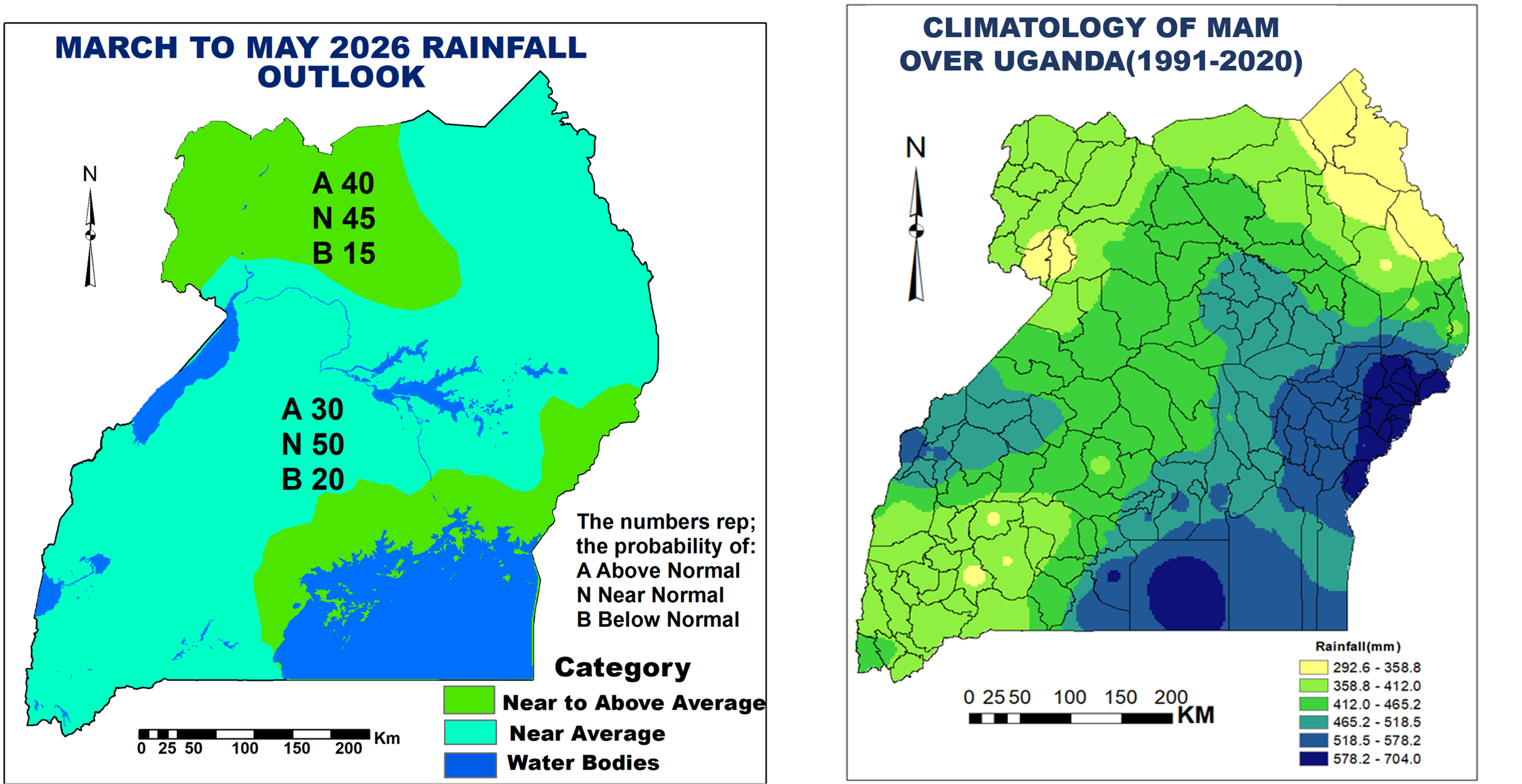
Overall, the MAM 2026 rainfall forecast indicates that most parts of the country are expected to receive near average rainfall. However, parts of Northwestern region, areas around Lake Victoria and parts of the Eastern region are expected to experience near-normal (near average), tending to above normal (above average) rainfall conditions during the forecast period.
Weather Forecast
Farming Tips
- For Livestock: Strengthen vaccination programs and ensure timely treatment and deworming of animals;
- For Livestock: Improve drainage in animal shelters and construct waterproof roofs where necessary;
- For Livestock: Harvest and store pasture as hay or silage before the peak rainfall periods;
- For Crops: Plant crops at the onset of rains using high-yielding, and improved varieties;
- For Crops: Use a mix of long-maturing and short-duration crops to maximize yields;
- For Crops: Apply good agronomic practices, including timely weeding, proper spacing, thinning and fertilizer management;
- For Crops: Invest in value addition and proper market timing to maximize economic returns.
- For Crops: Monitor and control pests and diseases through integrated pest management (IPM);
- For Fisheries: Raise pond dykes and stock fish in ponds to take advantage of increased water availability;
- For Fisheries: Use lifesaving equipment for example life jackets for safety and avoid night travel on lakes;
- For Fisheries: Regularly follow weather updates and advisories before you set out onto lakes and rivers for any activities.
- For Beekeepers: Protect hives by placing them under tree canopies or shelters to reduce exposure to heavy rainfall and direct winds;
- For Beekeepers: Secure hives firmly using stands and ropes to prevent wind damage or overturning;
- For Beekeepers: Avoid the use of harmful pesticides near apiaries to protect bee colonies;
- Water: Continuously monitor water levels in rivers, lakes and reservoirs to support early warnings systems;
- Environment: Enhance agroforestry and re-afforestation.
- Environment: Enhance waste disposal systems to prevent water contamination;
- Energy: Inspect and reinforce electricity infrastructure to reduce vulnerability to storm-related damage;
Key Decisions we make from Weather and Climate forecasts
Crop Care
When to plant, weed, irrigate, apply fertilizers, and harvest.
Harvest & Post-Harvest
When to harvest; dry-spell & rain-risk timing for safe drying and storage plans.
Livestock Care
Heat-stress alerts, water plans, and disease-risk updates.
Livestock Farm Start
Housing designs, breeding guidance, and health schedules.